
A logo file doesn't know what it's being stitched or pressed onto. The digitising and the press settings do — or should. GSM (grams per square metre) is just a measure of how heavy a fabric is, but it changes how a design has to be built: a setting that looks fine on a 300gsm hoodie can wreck a 160gsm polo, and a setting dialled in for a thin t-shirt won't reliably bond to a heavy fleece. When the same generic file and the same settings get used across every garment regardless of weight, one of these three problems usually turns up.
1. Puckering & Show-Through On Lightweight Fabric
Polos and light t-shirts typically sit under 180gsm — thin enough that dense stitching has nowhere to anchor without dragging the weave with it. Run a design built for a heavy garment straight onto fabric this light, without dropping density and swapping to a lighter stabiliser, and you get rippling around the edges plus "show-through" — the stitch pattern visibly texturing the front of a thin shirt even where there's no thread on top.
2. Gapped, Sunken Stitching & Patchy Vinyl On Heavy Pile
Fleeces, hoodies and softshells run 280gsm and up, often with a raised pile or nap. Stitch height and tension built for thin cotton can't punch through that loft consistently, so the design comes out gappy or looks like it's sinking into the fabric instead of sitting on top. The same mismatch hits vinyl: heat and pressure calibrated for a flat, thin t-shirt often only touches the highest points of a napped fabric, so the transfer bonds patchily and lifts at the low spots within a few washes.
3. Warping & Distortion On Stretch Fabric
Performance polos, softshells and other stretch or technical fabrics move under the needle in a way woven cotton doesn't. Without a stabiliser rated to hold that stretch, and density reduced so the design doesn't fight the fabric's give, the logo warps and pulls out of true — not always at rest, but once the garment is on a body and the fabric is under tension where it's worn.
Why We Check GSM Before We Touch A Needle
Outsourced digitising works off the logo file, not the garment. One set of settings goes out regardless of whether it's landing on a 150gsm polo or a 320gsm softshell, because the person building the file has usually never seen either.
We digitise against the actual garment, every time, which means fabric weight is one of the first things we check. Light polos and tees get reduced density and a lighter, correctly matched stabiliser so nothing ripples or shows through. Heavy fleece and hoodies get stitch height, tension and vinyl press settings adjusted for the pile so coverage stays solid and transfers bond evenly, not just at the high points. Stretch and technical fabrics get a stabiliser rated to hold their movement, so the design still sits square once it's being worn, not just on the table. It's the same free in-house process behind every job, and it's why the same logo holds up whether it's going on a t-shirt or a jacket.
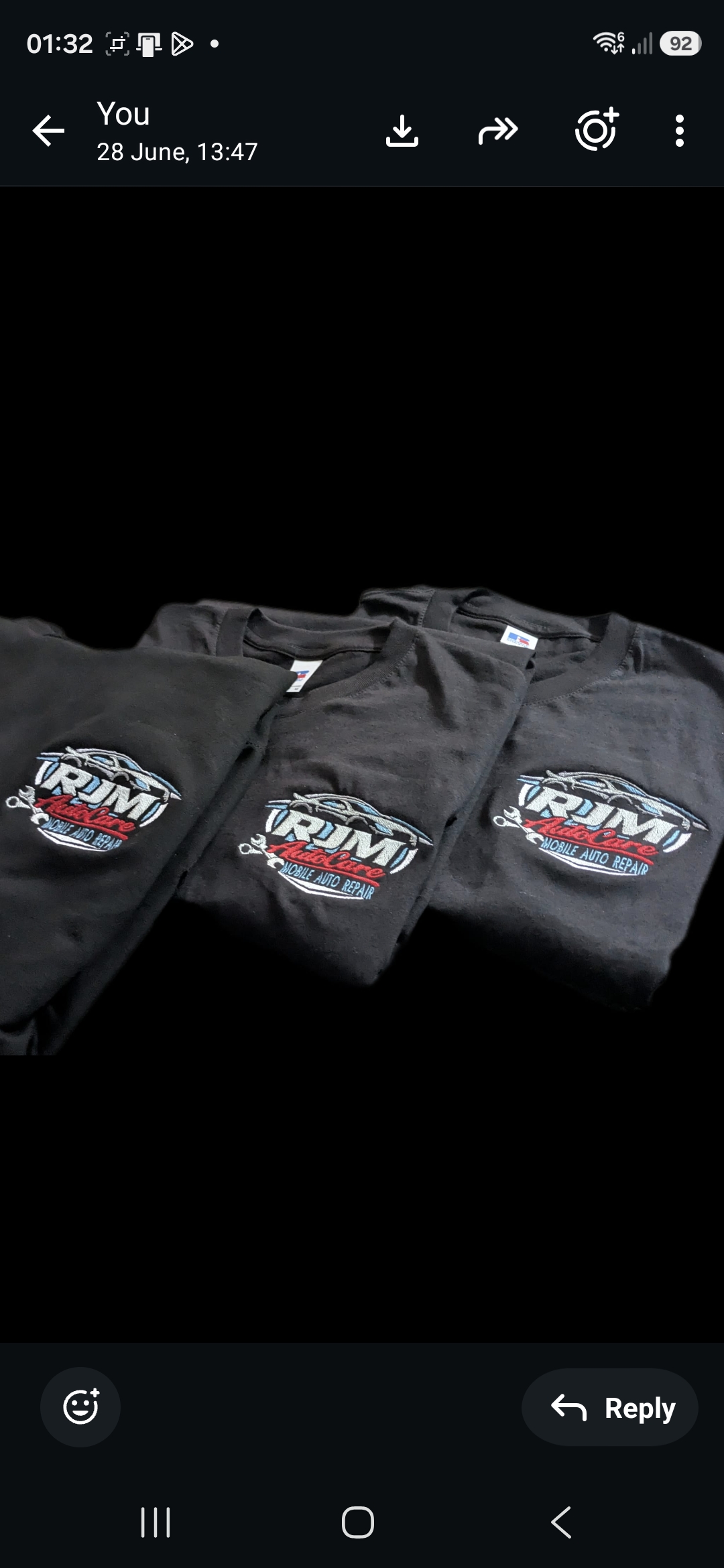
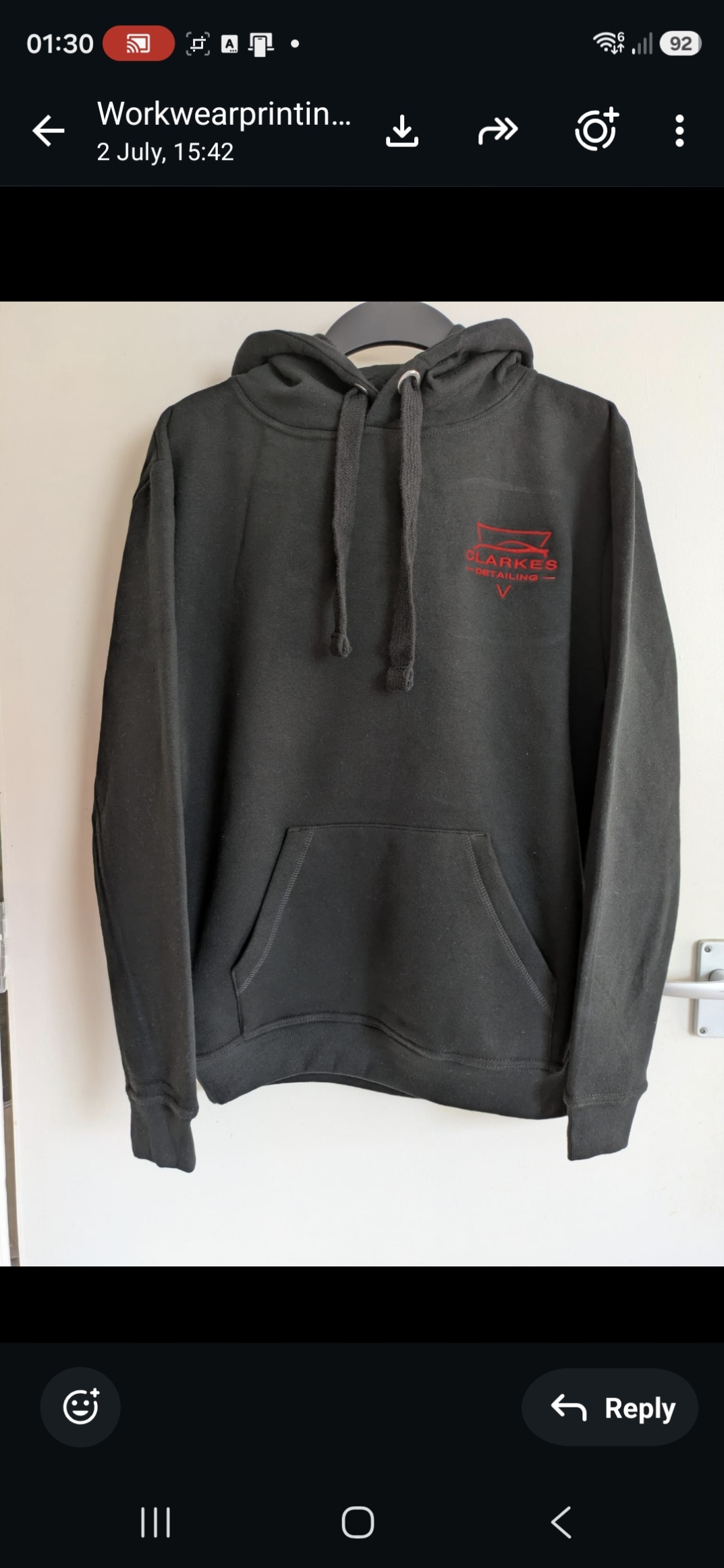
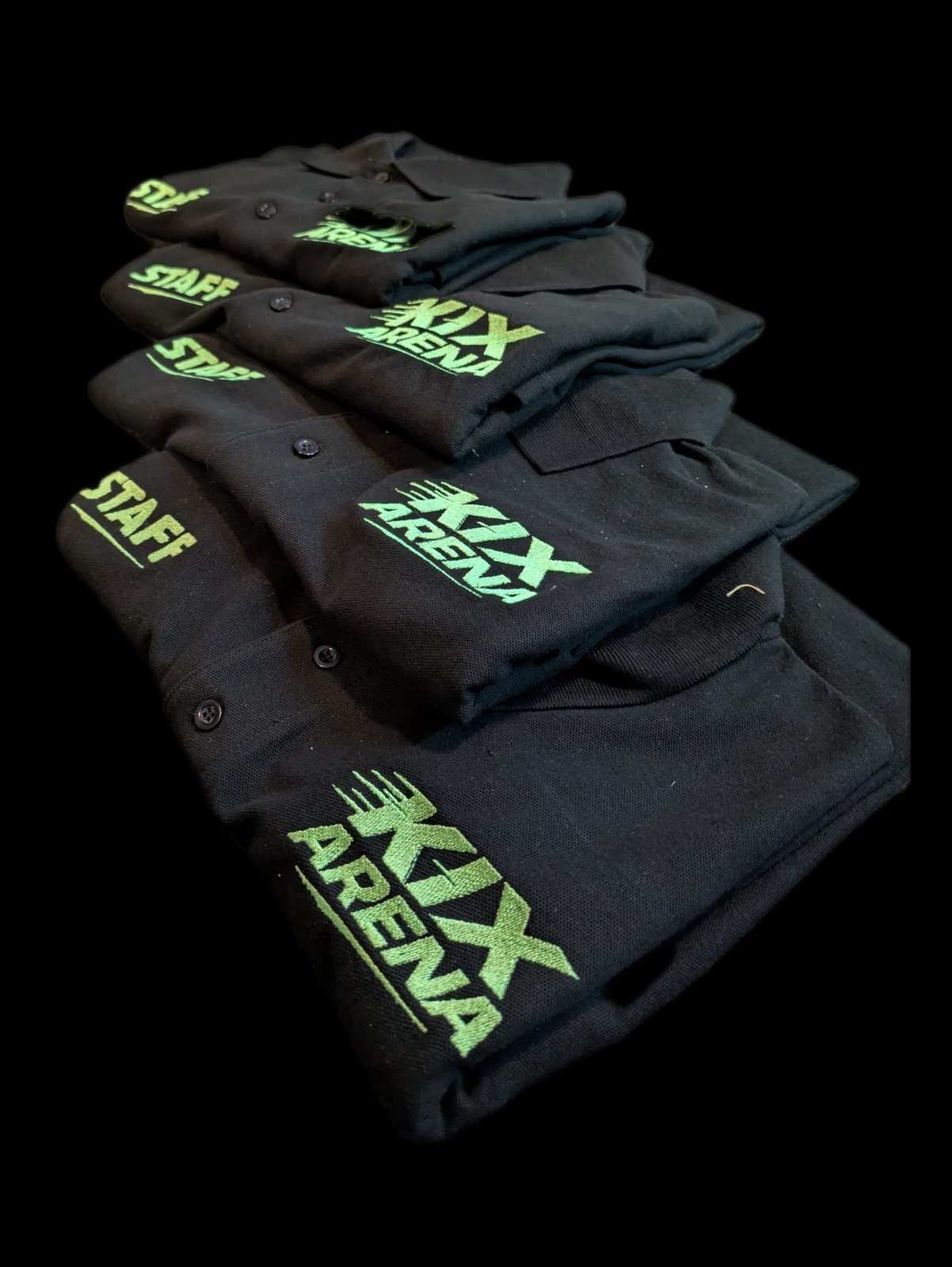
Different Fabric Weights, Same Standard
Three different weights, three different jobs — same care taken on each. Light cotton, heavy fleece, and stretch technical fabric, all sitting flat and holding their shape.
Further reading: T-Shirt GSM Guide: Best Weight for Printing & Embroidery, Backing and Stabilizer Guide.